Why Does My Puppy Bite More at Night?
Work out what happens before evening puppy biting, respond calmly and build a wind-down routine that fits your puppy.
Your puppy was manageable in the afternoon. Now they are grabbing sleeves, chasing ankles and launching at the sofa. It is tempting to conclude that they need another exhausting game or that they are suddenly being difficult. Neither conclusion tells you what happened before the biting started.
Evening biting is a pattern to investigate, not a diagnosis. Ordinary puppy mouthing can become harder to manage around excitement, frustration, missed rest or uncomfortable situations. The useful question is: what changes in your home at this time of day, and what does your puppy need before the next round begins?
Look at the hour before the first bite
Write down what your puppy was doing before teeth met clothing. Were they asleep until someone arrived? Had several people played with them in succession? Were you handling their paws, removing an object or trying to carry them somewhere? Similar-looking bites can occur in different contexts and need different responses.
Dogs Trust's guidance on mouthing and biting identifies excitement, frustration and pain among possible contributors. That is a reason to examine the situation carefully instead of calling every episode teething or tiredness.
Use a small three-part record: before, behaviour, after. For example: “Visitors played on the floor; puppy grabbed sleeves; everyone stood up and waved their arms.” That record suggests a different change from: “Puppy stiffened when a hand approached a chew.” The latter deserves careful assessment rather than routine play-biting advice.
Could missed rest be part of the pattern?
A puppy who has had a busy day may still appear energetic. Dogs Trust's first-night advice notes that a tired puppy can show a burst of activity. This does not prove that every fast-moving, bitey puppy needs sleep, but it is a good reason not to respond automatically with more excitement.
Compare evening incidents with the timing and quality of daytime rest. Did the puppy actually sleep, or spend an hour watching people walk past their bed? A quiet resting opportunity and an uninterrupted nap are different things. Our overtired puppy biting guide explains how to investigate the connection without imposing a rigid nap formula.
What to do when teeth reach skin or clothing
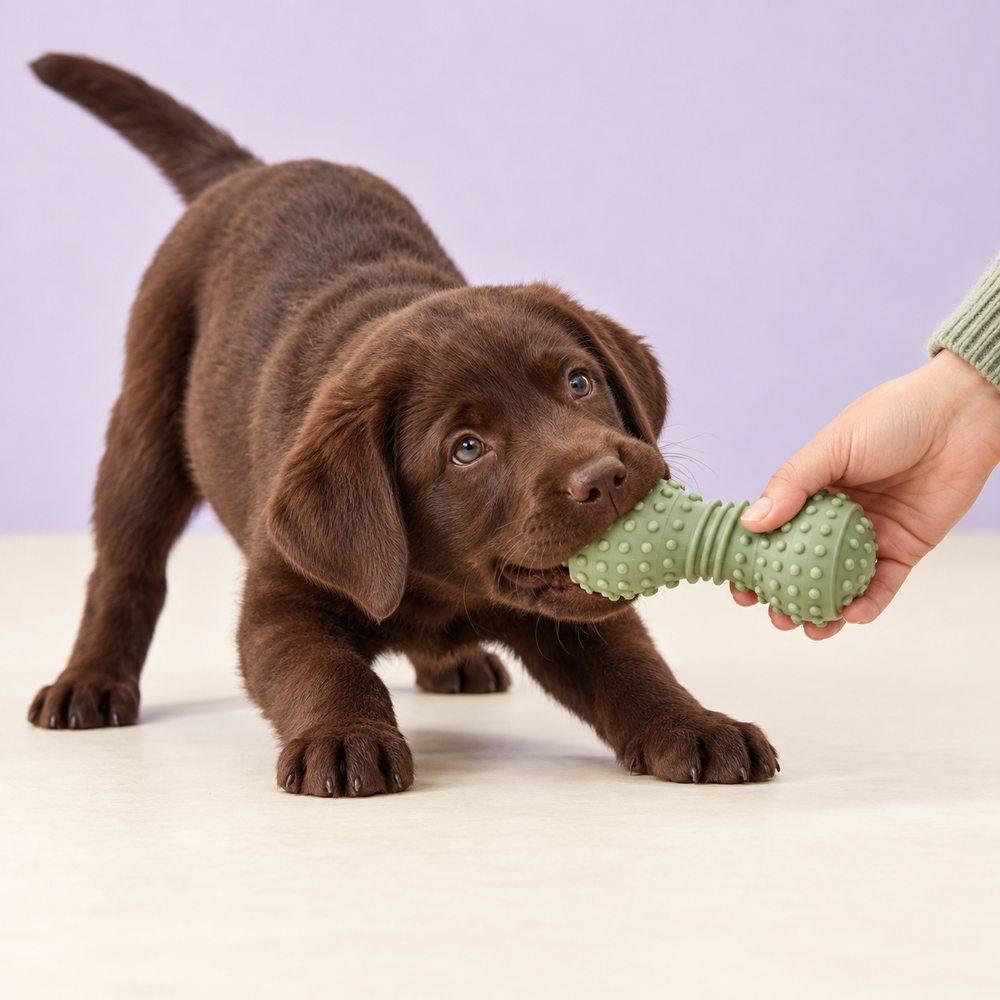
First make the situation safer and less exciting. Stop moving the bitten sleeve around. Keep your response quiet. If you can do so safely, offer an appropriate toy before the interaction escalates. Do not push your hands into the puppy's mouth or turn the moment into a physical contest.
If the puppy repeatedly returns to your hands, end that interaction calmly and use a safe barrier to create space. Stay close enough to support the puppy if separation is difficult. This is a pause for safety and a chance to meet their needs, not a punishment or an instruction to leave a distressed puppy alone.
Then check the context. Is a toilet opportunity due? Has handling become uncomfortable? Is there too much activity around the puppy? Would a familiar resting area make more sense than another game? Avoid cycling through increasingly exciting toys when the whole environment is already too much.
The Puppy Biting Decoder brings this observation work into a six-cause decoder, short response sequence and Bite Incident Log. Its aim is a consistent household response, not an instant cure or a deadline for biting to stop.
Build a wind-down routine before the usual difficult period
Choose a starting point based on your notes. If the first incident often appears while dinner is being prepared, prepare the puppy's safe space and suitable activity before cooking begins. You should not have to search for a chew while protecting your ankles.
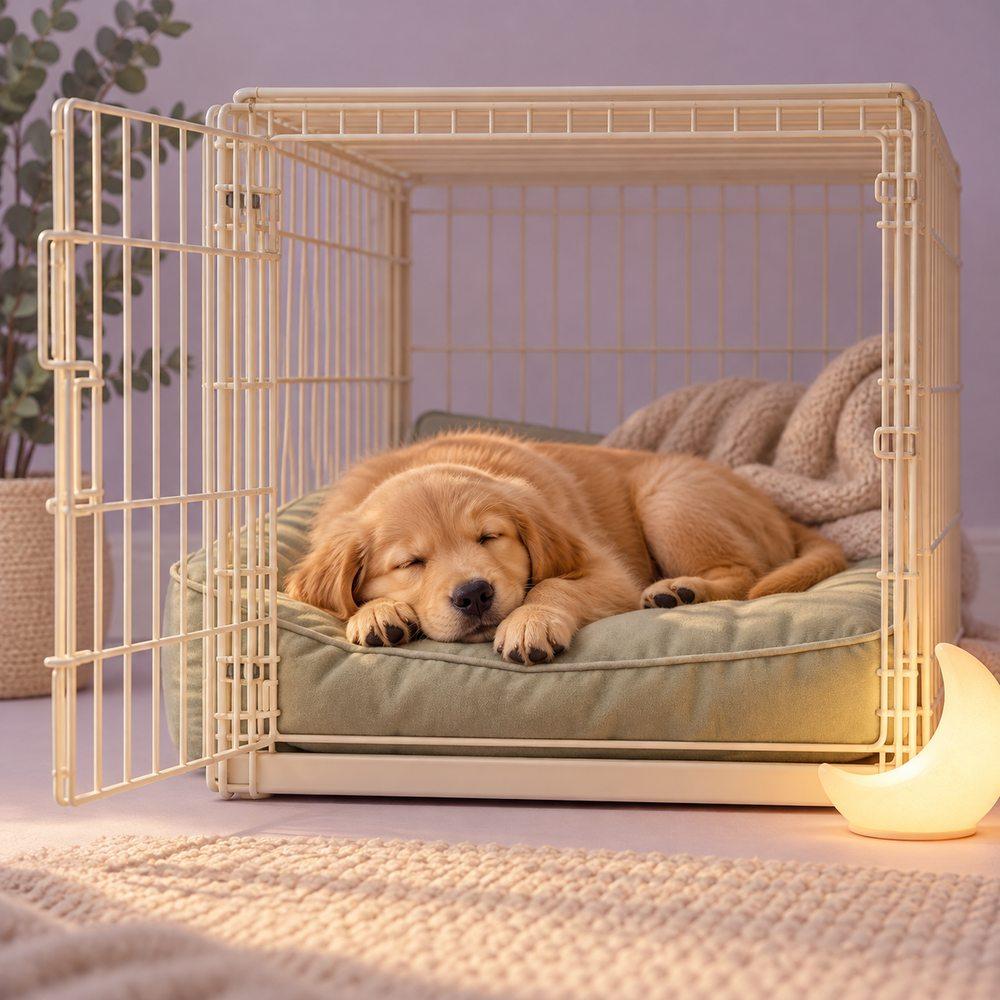
A practical sequence might include a toilet opportunity, a brief familiar activity and quiet time in a comfortable area near you. Supervise chews and toys according to their design and your puppy's habits. Let an already resting puppy stay asleep instead of waking them for another scheduled activity.
Our puppy sleep schedule article helps you organize those transitions. Use it as an observation framework, then change one part of the evening at a time. If you change dinner, naps, visitors and play all together, you will not know which adjustment mattered.
Agree on the response with everyone at home
An adult who wrestles with the puppy's mouth while another scolds the same behaviour creates an unclear pattern. Pick a simple shared response and put suitable toys where people need them. Arrange active adult supervision around children; use separation when that supervision is not possible.
Record more than the number of incidents. Notice whether episodes are shorter, redirection is easier, or recovery takes less time. Those observations can help you decide what to repeat. They are not proof that all biting risk has disappeared.
When this is beyond ordinary puppy mouthing
Repeated hard or puncturing bites, guarding, fear, suspected pain, or risk to a child call for individual help from a veterinarian and an appropriately qualified reward-based professional. Do not keep provoking the situation to confirm a theory. Seek medical advice for injuries as appropriate.
For normal everyday mouthing, preview the Puppy Biting Decoder's response page and incident log. Start with the next predictable situation and one change you can observe clearly.
Sources
PupSkills publishes educational guides for everyday training. The articles draw on the sources listed above and do not replace individual veterinary or behaviour advice. Read our editorial approach.