Your Puppy's First Week: What to Train First
Build a manageable first-week puppy routine around toilet trips, rest, name response and simple household rules.
A new puppy can make every task feel urgent. There are accidents to clean, shoes to rescue and a bedtime that suddenly involves more planning than your working day. A useful first week starts with a small set of repeatable routines. You do not need a puppy who can perform a long list of cues by Sunday.
The practical goal is to help your puppy understand where their needs are met and help you notice what happens before problems develop. Choose consistency over a crowded training timetable.
Set up the day before adding more lessons
Write down four household decisions: the toilet location, the resting area, where meals happen and who supervises each part of the day. Put suitable toys within adult reach. Use safe barriers when you cannot actively supervise, with your puppy's comfort guiding how that space is introduced.
Do a quiet walk through your home at puppy height. Move cables, medicines and small swallowable items. Decide where visitors will leave bags and shoes. These decisions remove repeated conflicts and make training easier to follow through.
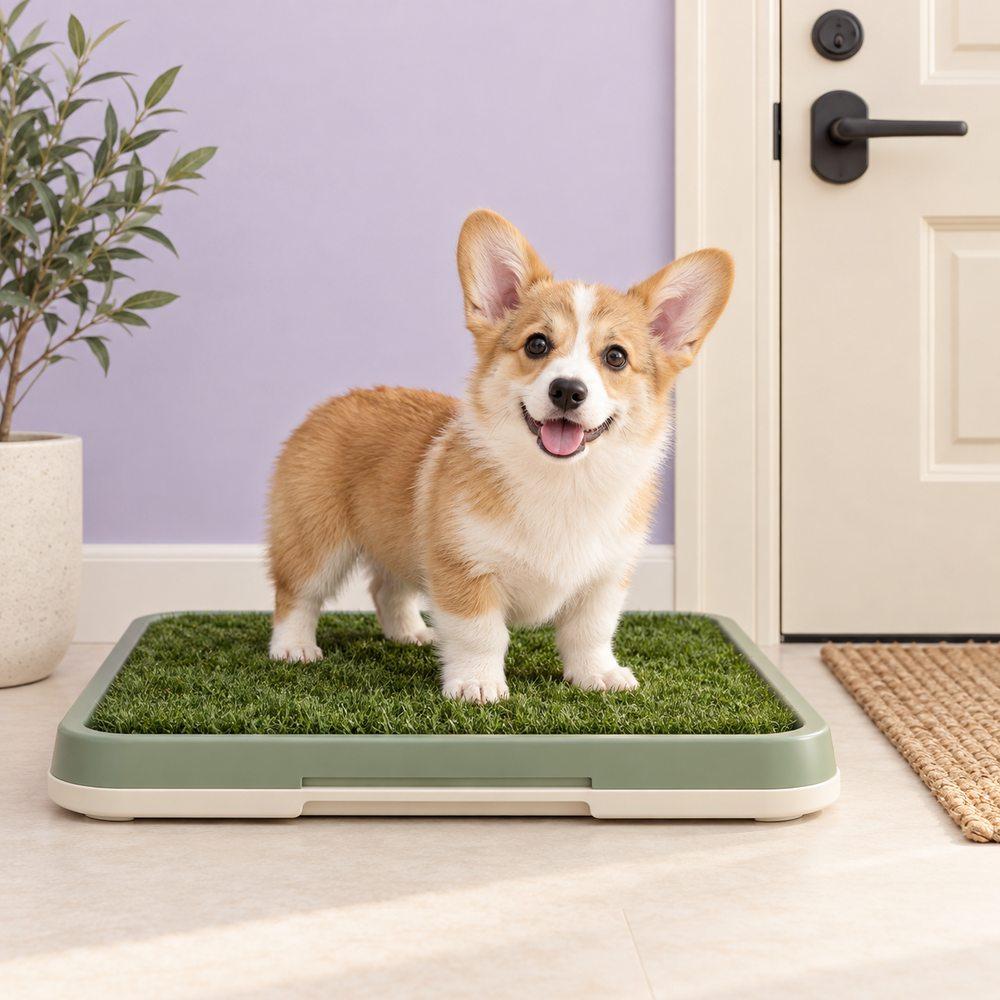
Keep the first routine simple: wake, toilet opportunity, food or a short activity, another toilet opportunity when needed, and a chance to rest. Adapt it to what your puppy actually does. Our apartment potty-training plan explains how to include the time needed to reach the toilet area.
Teach one tiny attention skill
Start name-response practice when your puppy is comfortable, awake and not busy with something difficult to leave. Have a few small rewards ready. Say the name once in a friendly voice. When your puppy turns toward you, mark that response with a brief word such as “yes” and give a reward.
If nothing happens, move to an easier setting rather than repeating the name louder. Try a shorter distance and fewer distractions next time. A few successful repetitions are enough. This is a way to introduce communication, not a test of obedience.
Agree on the marker word with the household. Avoid having one person say “come” when they mean look, while another uses it to ask the puppy to run across the room. Clear language makes your notes more useful too.
The AVSAB humane-training position recommends reward-based methods for dog training. You can apply that principle immediately by noticing and rewarding actions you want repeated, without scaring or physically correcting the puppy.
Choose a realistic weekly priority
Pick one main skill and one routine to improve. For example, your skill might be turning toward a name; your routine might be reaching the toilet spot promptly after naps. Both can fit into ordinary moments without scheduling an hour of training.
For a written sequence, The 12-Week Puppy Training Roadmap provides twelve weekly focus plans, a foundation skill library and a household consistency sheet. Its weeks are a flexible framework: repeating a week is a sensible choice when the current setup still needs work.
Use a short note after practice: where you were, what happened and what you will make easier or repeat. “Looked up twice in the kitchen; ignored me by the open door” gives you a useful next step. “Good puppy today” does not tell you how to set up tomorrow.
Protect rest and manageable experiences
Training does not need to fill every awake moment. Plan quiet time and use our puppy sleep schedule guide to identify interruptions. Introduce new sights and sounds in small, comfortable doses; safe puppy socialization explains how to balance exposure with your veterinarian's advice.
Review the week without grading the puppy
Ask three questions: Which routine became easier? Where did the same difficulty repeat? What can the household change before asking more from the puppy? Keep one helpful change and simplify one difficult situation. If fear, pain, panic or dangerous biting is involved, seek individual professional help rather than adding more exercises.
When you are ready to turn those observations into next week's plan, preview the Puppy Training Roadmap, including its real Week 1 lesson and weekly planner.
Sources
PupSkills publishes educational guides for everyday training. The articles draw on the sources listed above and do not replace individual veterinary or behaviour advice. Read our editorial approach.