A Puppy Sleep Schedule That Leaves Room for Real Life
Plan puppy rest around waking, toilet needs and household activity without relying on a rigid hourly sleep formula.
A useful puppy sleep schedule helps you protect rest and notice toilet needs. It should not turn the day into a battle over whether your puppy has followed an exact number of minutes awake. Begin with a repeatable sequence, then adjust it using what you observe.
This is particularly helpful in busy homes, where a puppy can have plenty of beds but few genuinely quiet opportunities to use them.
Build around transitions
Mark the events that already structure your day: waking, meals, outings, visitors and the evening wind-down. Plan a toilet opportunity after waking and at other likely times rather than treating sleep as separate from the rest of puppy care.
Use a simple sequence: wake and toilet, an appropriate activity, another toilet opportunity when needed, then a comfortable chance to rest. The activity could be a short training session, supervised play or a manageable new experience. It does not need to be more exercise every time.
Leave space between planned activities. A puppy who falls asleep earlier than expected does not need to be woken to complete a checklist. If the day changes, resume the next useful part of the sequence instead of trying to catch up with every missed item.
Make the resting place work
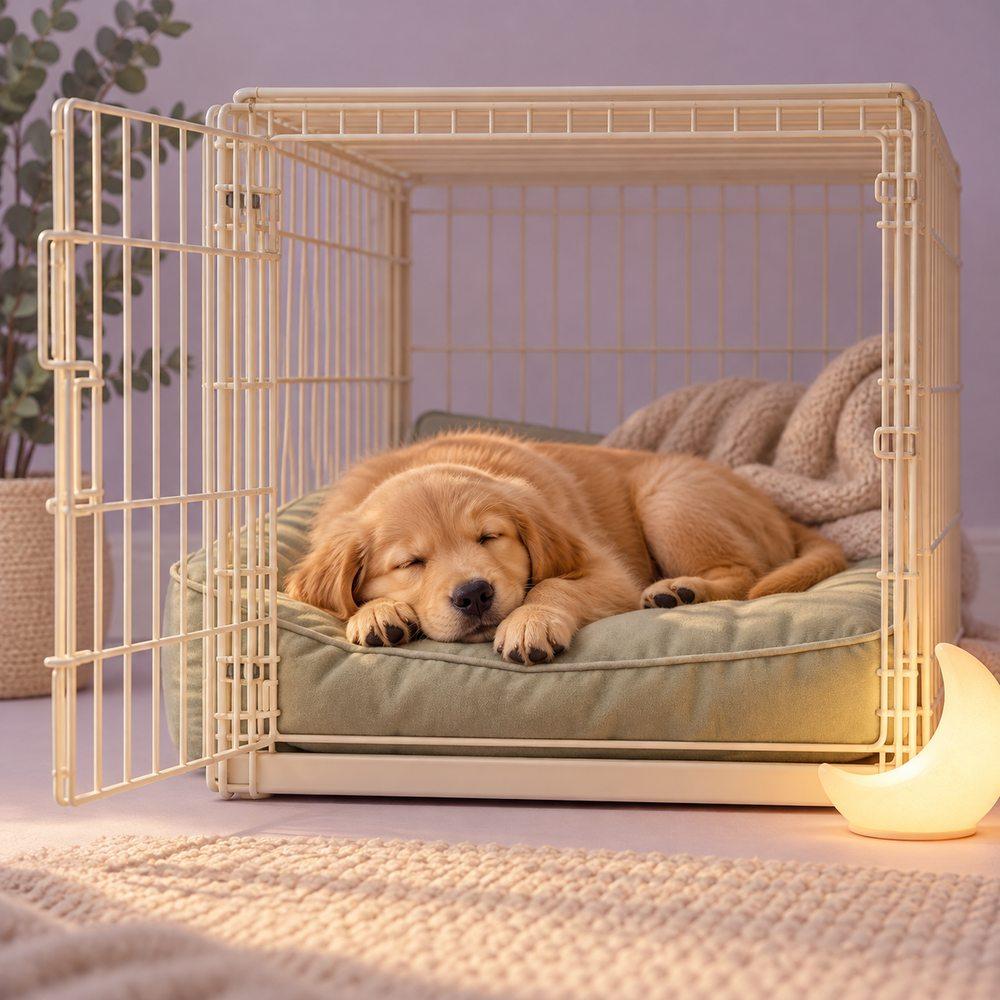
Choose somewhere comfortable and away from constant foot traffic, while keeping the puppy's need for company in mind. Check noise, temperature and interruptions. A covered crate is not automatically restful, and confinement is not suitable if it causes panic.
RSPCA puppy-care guidance recommends an undisturbed resting place. Put that into a household rule: sleeping puppies are left to sleep. Move exciting play and repeated greetings away from the resting area.
If you are introducing a crate, separate daytime comfort practice from the urgent need to get through tonight. Our first-nights crate guide explains why a pen or another safe area may be more workable while the crate is still unfamiliar.
Keep a short waking record
For a few days, record approximate sleep, interruptions and what happens after waking. Overnight, note whether a toilet trip produced anything and how easily the puppy resettled. These details are more useful than recording only “bad night.”
For example, repeated waking just after a heating system starts suggests a different question from waking followed immediately by toileting. The record does not diagnose the cause, but it helps you make a focused adjustment or give your veterinarian a clearer history.
The 14-Night Crate & Sleep Reset includes a bedtime routine builder, night-waking log and a decision system for considering different waking patterns. Fourteen nights describes its framework, not a guarantee that a puppy will sleep through.
Use the evening to reduce surprises
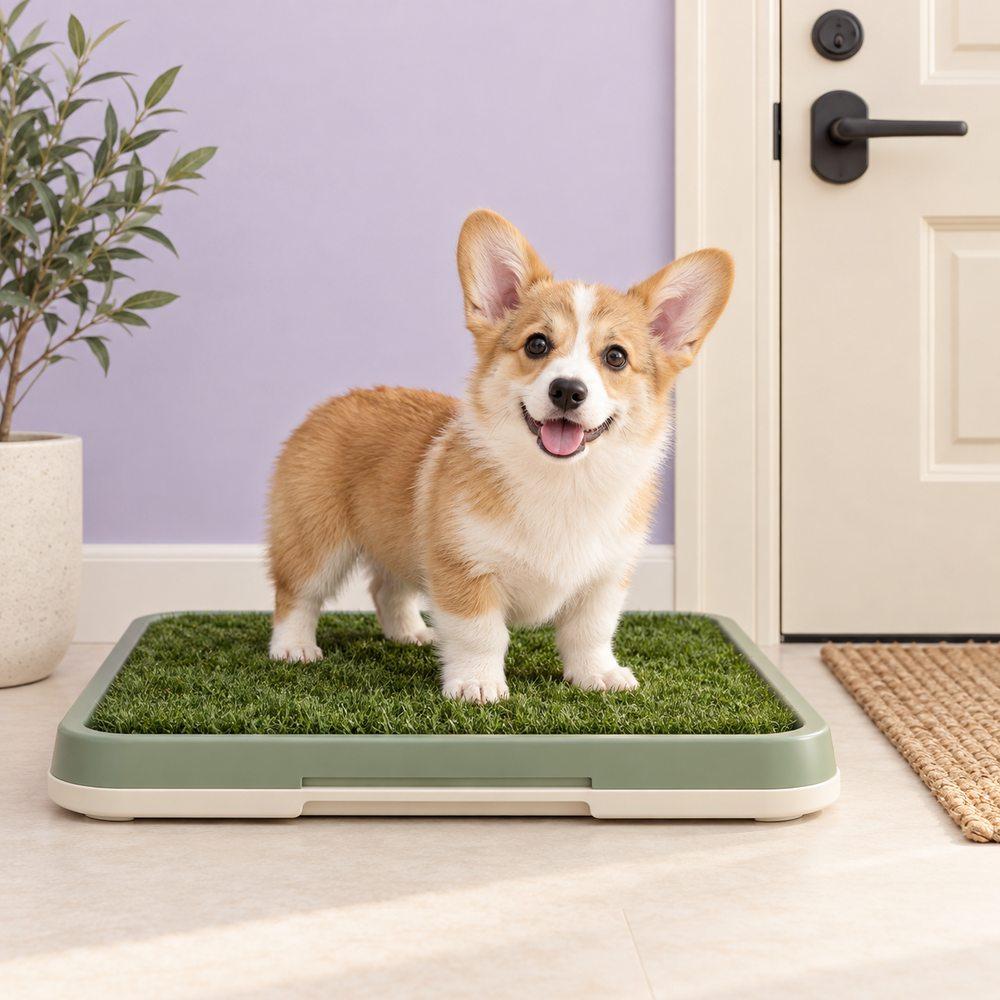
Prepare toilet equipment before bedtime. Agree on who responds overnight and keep the response calm and practical. Consider whether the room suddenly becomes busy, whether the puppy has missed daytime rest, or whether the chosen sleeping arrangement asks for more separation than they can handle.
If evening mouthing is part of the problem, compare the routine with why puppies bite more at night. Do not assume that a burst of activity always needs a longer walk.
Respond to needs, not a countdown
Young puppies may require overnight toilet opportunities. They may also need reassurance while adjusting to a new home. Do not leave escalating distress untreated because a schedule says they should be asleep. Veterinary advice is appropriate for sudden changes, persistent discomfort, difficulty resting or other signs of illness.
At the end of a few days, keep what helps and adjust one recurring difficulty. Preview the Crate & Sleep Reset if a written routine and printable night log would make that process easier.
Sources
PupSkills publishes educational guides for everyday training. The articles draw on the sources listed above and do not replace individual veterinary or behaviour advice. Read our editorial approach.