Apartment Puppy Potty Training: Plan the Trip, Not Just the Timer
Build a practical puppy toilet routine that accounts for elevators, hallways, supervision and your puppy's actual patterns.
In an apartment, a toilet break starts before you reach the grass. Finding the leash, waiting for the elevator and crossing a busy lobby all use time. A plan that ignores those steps can look sensible on paper and still produce an accident by the front door.
Start with your building and your puppy, not a universal rule about how long puppies should hold their bladder. The goal is more well-timed opportunities and better information about the misses.
Choose a toilet setup you can actually reach
Decide whether your current setup is outdoors, a designated indoor toilet area, or a deliberate combination. Your veterinarian can advise on disease risks and appropriate outdoor access for your puppy. Follow building rules and avoid shared areas that are unsuitable for toileting.
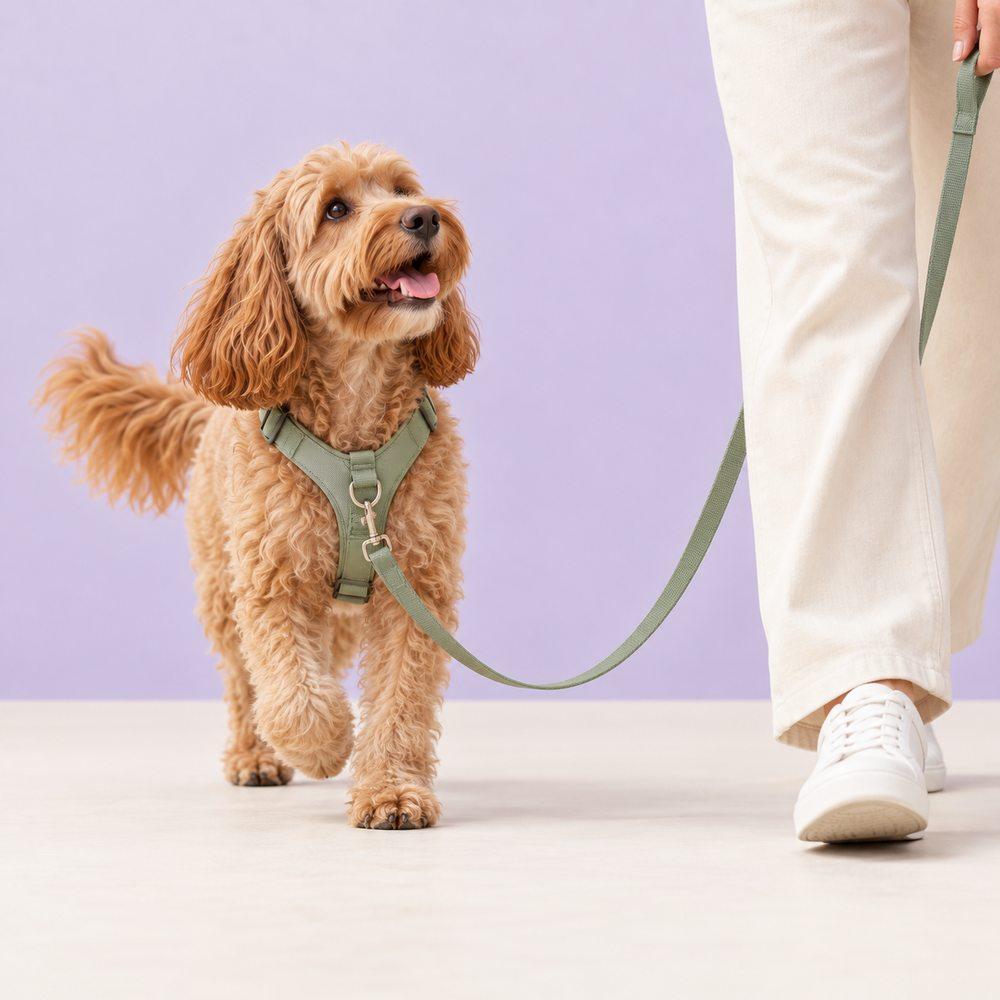
Put the equipment together before the next urgent trip: fitted walking equipment, bags, keys and a few small rewards. Choose a primary route and a practical backup for elevator delays or closed access. If you use an indoor option, keep its location clear and consistent instead of moving it around in response to every accident.
An indoor setup does not automatically teach an outdoor routine. If outdoors is the eventual goal, treat the change as another learning process and record it. Avoid changing the surface, location and schedule at the same time if you can make a smaller adjustment.
Watch events as well as the clock
Dogs Trust's toilet-training guidance recommends opportunities after waking, food or drink, play and excitement, and rewarding toileting in the intended place. These events are useful prompts; your puppy's own pattern determines what you need between them.
For three ordinary days, note wake times, meals, trips, successes and accidents. Include how long the journey downstairs took. You might discover that the problem is not an arbitrary interval: it is the ten minutes spent making coffee after your puppy wakes.
Keep the record brief enough to maintain. “Woke 7:10; downstairs 7:18; accident in lift” is enough to identify an access problem. The next attempt might involve preparing your things before the nap ends and leaving promptly on waking.
Make successful trips easy to understand
Take your puppy to the selected area and give them an unhurried opportunity. Reward promptly after they finish. Avoid celebrating so vigorously during the act that you interrupt them. If nothing happens, return to close supervision and offer another chance soon, guided by the situation.
Keep toilet trips distinct from an unpredictable tour of the whole building. The simple repetition helps you observe what happened. There can still be sniffing and enjoyable activity when appropriate; the point is to avoid forgetting why you came downstairs.
The Apartment Puppy Potty System includes a daily schedule builder, seven-day log and accident investigation sheet. These support the planning work rather than promising an accident-free deadline.
Review an accident without blaming the puppy
Ask what changed before the accident: a missed waking signal, longer play, delayed access or a gap in supervision. Clean the area with a pet-safe product suitable for the surface, following its directions. Punishment does not tell the puppy where to go.
Choose one adjustment for the next comparable situation. If the accident happened while you answered a delivery, decide where the puppy will be and who will supervise next time. If it happened after a busy evening, compare the event with your puppy sleep and waking routine.
Know when the plan needs a different kind of help
Frequent sudden changes, straining, pain or blood should be discussed with a veterinarian. Do not assume every accident is a training problem. For a new puppy whose whole day feels disorganized, start with first-week priorities alongside the toilet log.
To build your own repeatable route and timing plan, see the workbook and its real printable previews. Measure success by useful patterns and improving opportunities, not comparison with someone else's puppy.
Sources
PupSkills publishes educational guides for everyday training. The articles draw on the sources listed above and do not replace individual veterinary or behaviour advice. Read our editorial approach.