A Reactive Dog Walk Plan: Prepare Space and an Exit
Plan more manageable walks with route choices, early observations, rehearsed exits and useful records of triggers and recovery.
When your dog starts barking and lunging, it is difficult to invent a good route out of the situation. Preparing the route and rehearsing a simple way to move away gives you decisions you can use before the hardest moment arrives.
This is management and low-intensity practice for owners who can safely handle their dog. It is not a treatment plan for severe fear or aggression. If there has been a bite, you cannot maintain safety, or your dog is struggling badly, get individual professional support.
Map the route before walking it
Look for visibility, width and exits. A quiet-looking path can still be difficult if a dog appears around a blind corner and there is nowhere to go. Mark narrow sections, busy entrances and places where off-leash dogs commonly approach.
Choose an alternative for each difficult section. That might be a wider road, a different time or a shorter route. Include a way to return home without completing the full loop. Finishing the planned distance is less important than managing what is actually happening.
Dogs Trust's reactivity guidance recommends quiet settings, moving away and seeking veterinary assessment for possible underlying health issues. It also distinguishes immediate management from longer-term training and support.
Practise the exit away from triggers
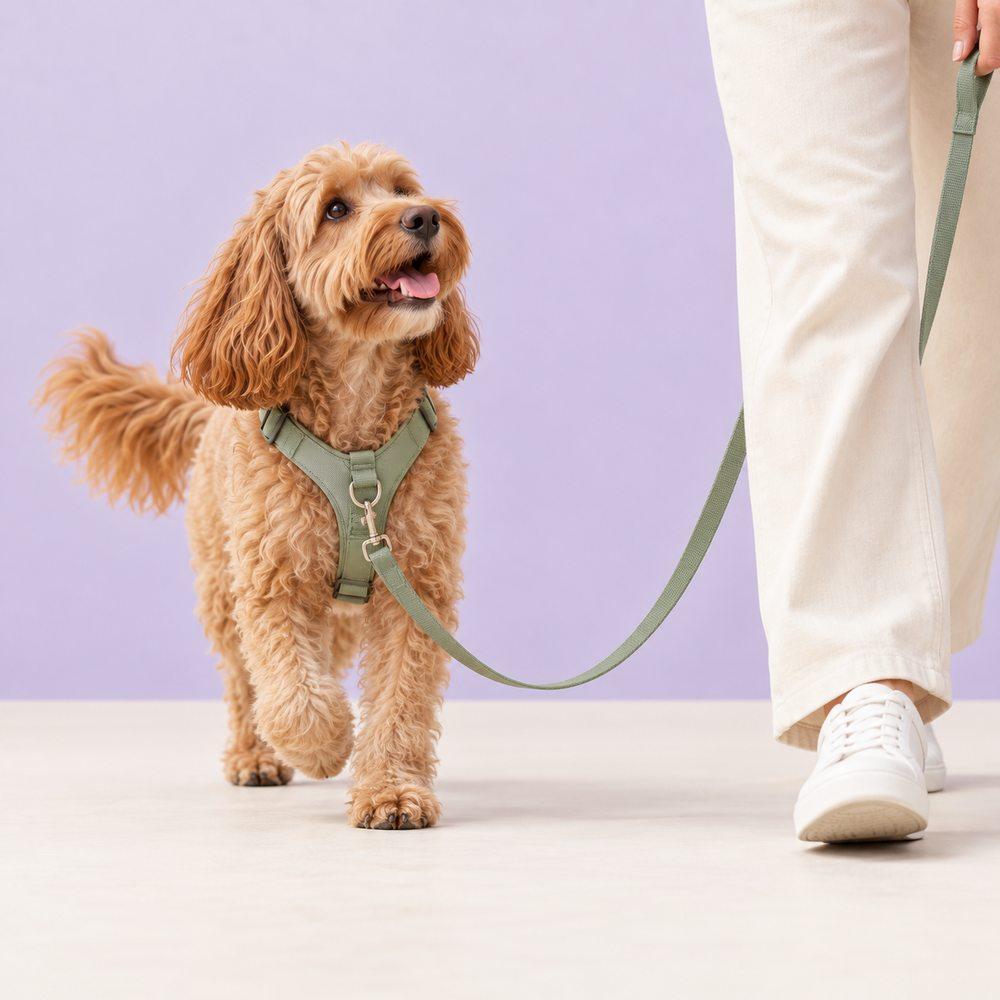
In an easy setting, rehearse a friendly change of direction. Give your chosen cue, turn and reward the dog for moving with you. Keep the movement smooth and the setup simple. You are building a familiar action you can later use early, not dragging the dog through a reaction.
You can also practise a hand target or a small food-search game where appropriate and safe. Introduce these without triggers first. Do not expect an unfamiliar game to work for the first time while another dog is approaching.
Ordinary loose-leash foundations can support movement between situations, but do not confuse leash manners with changing a fearful or frustrated response.
Notice the earlier change
Record what your dog does before the bark or lunge. Perhaps their movement slows, their body becomes still or attention locks onto something ahead. Learn your dog's pattern rather than relying on a single signal in isolation.
Use that information to leave sooner. Do not stay close to a trigger solely to see whether the dog will react. If a situation becomes difficult, prioritize distance and safe movement. Avoid forced greetings and corrections that add pain or fear.
The Reactive Walk Management Planner provides a route planner, move-away foundation skills and recovery records. It supports preparation and observation; it does not promise to cure reactivity within thirty days.
Record the walk in useful detail
Afterward, note the trigger, location, approximate distance, your response and what happened next. Include whether your dog could resume ordinary sniffing or remained highly alert. A difficult encounter near the start may change what is sensible for the rest of that walk.
Avoid comparing two days as if conditions were identical. A quiet evening route and a weekend path full of dogs are different tasks. Keep the record specific enough to distinguish an improved setup from a harder environment.
If recall is part of your wider training, recall around distractions explains why safety measures stay in place even when practice improves. Do not use off-leash freedom as a test of whether reactivity has resolved.
Make the next walk easier to plan
Keep one route feature that helped, change one feature that trapped you and rehearse your exit again in a calm setting. If reactions are escalating, recovery is poor or pain may be involved, take the notes to your veterinarian and a qualified reward-based behaviour professional.
Preview the Reactive Walk Management Planner for a written before, during and after-walk plan. A workable next walk begins with the distance and options your dog needs today.
Sources
PupSkills publishes educational guides for everyday training. The articles draw on the sources listed above and do not replace individual veterinary or behaviour advice. Read our editorial approach.